Have you ever wondered what that coin collection could be worth that is sitting in the attic or basement? Have you been spring cleaning and need to make some room in your house? Your gold and silver coins may be worth a lot more than you think. First thing you should check when going through your old silver U.S. coins is if they are, in fact, silver!
Coins from 1964 and earlier are 90% silver – except nickels. Although many pre-1964 coins or “junk silver” coins are sold for melt value, it’s very important to know that certain coins, depending on their date and/or mintmark could have numismatic value and be worth much more. Numismatic coins are rare or valuable and have an external value above and beyond the base metal value of the precious metal.
In this, the first installment of a multi-part blog, we will begin to discuss the coins you may find laying around – and what they may be worth!
Wartime Nickels (1942-1945)
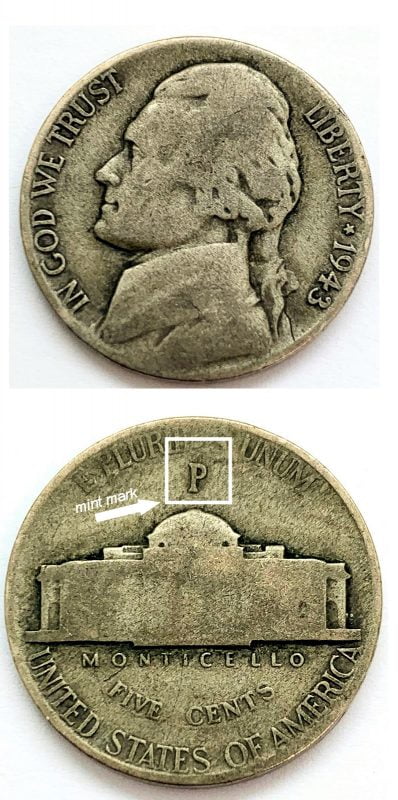
Some nickels have silver content and are considered wartime nickels. These nickels are from 1942-1945. The production of the first wartime nickels began in Philadelphia at the Philadelphia mint, notice the P indicating the mint mark.
For people to recognize the difference of this new composition – which consisted of 35% silver – there was a large mint mark that was placed on the reverse (back) of the coins above Monticello. The mint marks “P” “D” and “S” represent, Philadelphia, Denver and San Francisco Mints. Usually when a coin had no mint mark it meant that it was minted in Philadelphia. That later changed in 1980 when a “P” was added to indicate it was minted in Philadelphia.
The wartime nickels were an exception to the standard Philadelphia ‘no mint mark’ rule, as they added the large “P” above Monticello.
Buffalo Nickels (1913-1938)
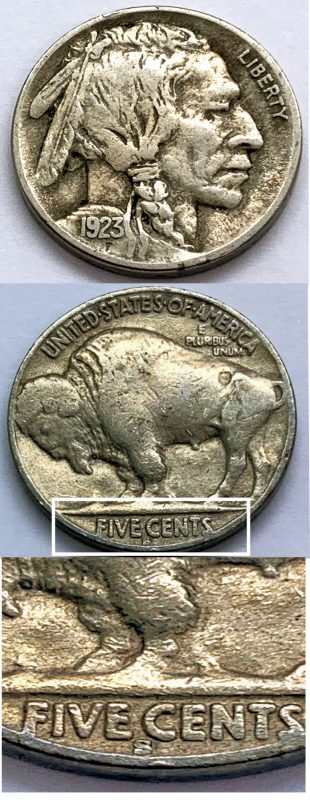
One of the more commonly seen nickels is the buffalo nickel. First minted in 1913, it actually has no silver content. The “D” and “S” mint marks, if present, are centered under the “FIVE CENTS” on the reverse. As is standard, coins minted in Philadelphia have no mint mark on this coin.
Except for certain key dates, buffalo nickels are usually purchased as “full date”, “partial date” or “no date” coins. A later blog will be posted on how buffalo nickels were turned into examples of the sculptural art form known as ‘Hobo nickels’.
Liberty “V” Nickels (1883-1913)
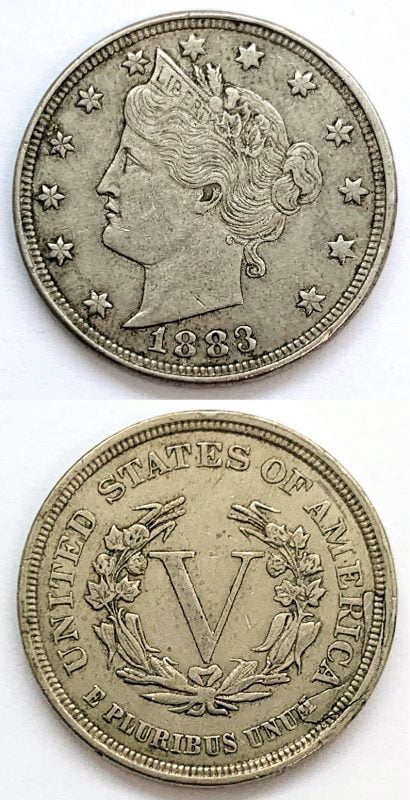
Liberty nickels are often referred to as V nickels or V-back nickels because of its design with the V on the reverse for the number 5 in roman numerals. These nickels were minted from 1883-1913 and do not have any silver content, however we purchase them quite often.
Roosevelt dimes (1946-1964)
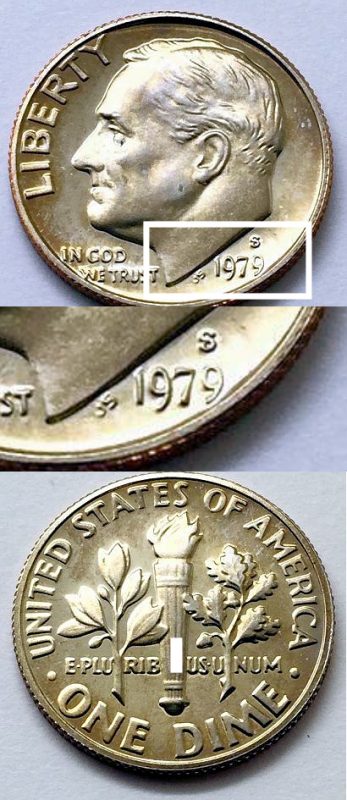
Although Roosevelt dimes are still the current currency, the dimes that are 90% silver are from 1946-1964 as well as the modern silver proof dimes (typically found in silver proof sets) from 1992 to 2020. There are only 4 Roosevelt dimes worth looking for in circulation that are rare and hard to find.
#1. 1964 Cooper-Nickel clad Roosevelt error dime. This happened as the mint was moving production from silver to copper-nickel
#2. 1965 Silver Roosevelt error dime which is another rare and transitional error
#3. 1982 no P Roosevelt Dime where the new “P” mintmark which started in 1980 for the Philadelphia Mint was accidentally omitted
#4. 1996-W Roosevelt Dime. The “W” mintmark is from the West Point mint and these dimes were not issued for circulation. It is only from people breaking up mint sets that any of these dimes can possibly be in circulation
Mercury dimes (1916-1945)
Barber dimes (1892-1916)
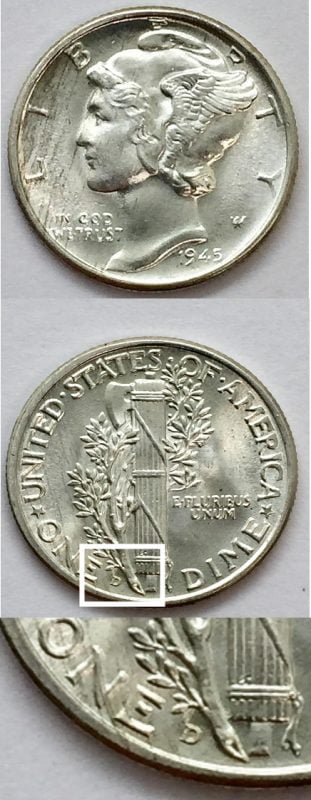
These older dimes are all 90% silver and have key dates worth looking into. The mint mark for the Mercury dimes can be found on the reverse, to the left of the fasces. The mint mark for the Barber dime can be found on the reverse, under the wreath.
Mercury dime is also commonly referred to as a Winged Liberty Head dime and is probably the most common dime sold as silver bullion next to the Roosevelt dime. The Mercury dime has a few keys dates that include the 1916D, 1921, 1921D, 1942/41, 1941/41D.
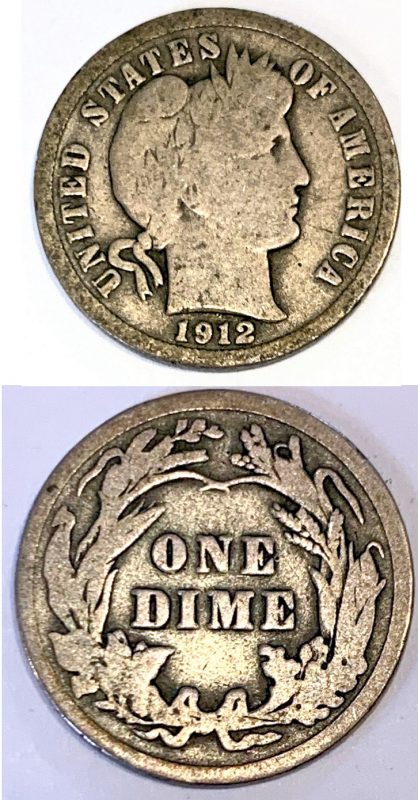
Barber dime key dates include the 1892S, 1894O, 1895, 1895O, 1896O, 1896S, 1897O, 1901S, 1903S, 1904S
Much older dimes that are seen less frequently include the Seated Liberty dimes from 1837-1891 and the Capped Bust dimes from 1809-1837
Seated Liberty dimes (1837-1891)
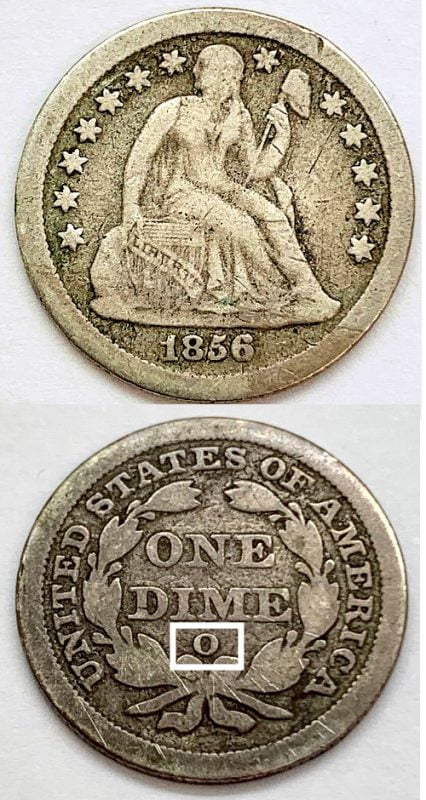
Seated Liberty dimes come in many varieties from 1837-1891. There are several varieties that exist for the Seated Liberty Dime because of design changes in the drapery, arrows, stars, and legend.
These types are:
Type 1: No Stars (1837-1838)
Type 2: No Drapery (1838-1840)
Type 3: Stars Obverse (1840-1860)
Type 4: Stars Obverse Arrows at Date (1853-1855)
Type 5: Legend Obverse (1860-1891)
Type 6: Legend Obverse Arrows at Date (1873-1874)
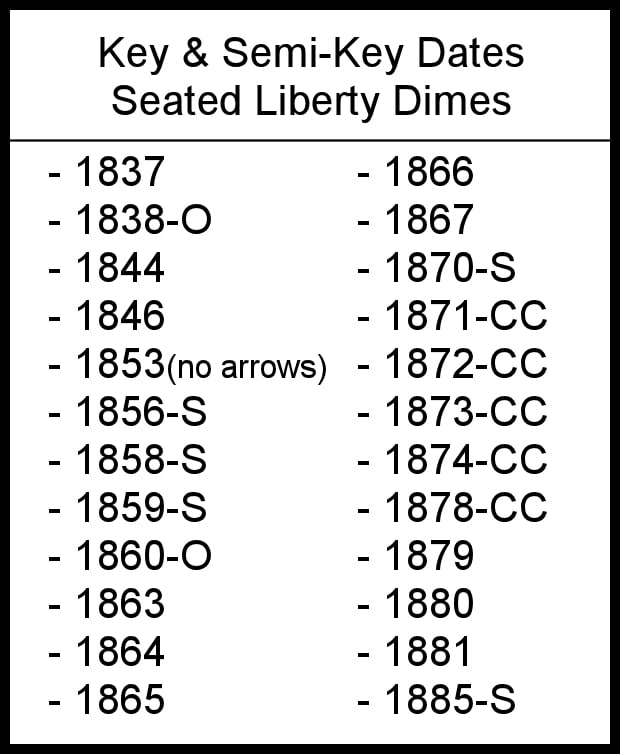
As with many coins, the value depends on several factors, including key or semi-key dates. For the Seated Liberty, some to look out for are the following:
Capped Bust Dimes (1809-1837)
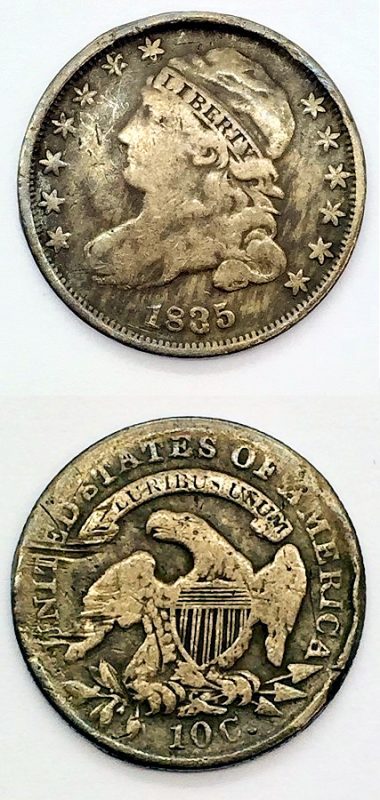
The Capped Bust dime comes in two Types. Type 1, Large Dentils from 1809 to 1828 and Type 2, Small Dentils from 1828 to 1837. Some years were skipped during the coinage of the Type 1 Capped Bust Dimes. Although there were only 51,065 coins minted in the initial year in 1809, the 1822 Capped Bust Dime is considered more of a rarity – and worth more at every grade.
Due to the high mintage of certain years, the rare coins come in more specific varieties and proof strikes. In the higher grades, many dates can be worth tens of thousands of dollars. In lower grades, a coin like the 1829 curl base2 is a rarity, and worth more because of its variety.
Thank you for reading this first part of our multi-part coin blog series! If you have any of these coins, and would like to get a free estimate, please call us at 860-355-0191.
Washington quarters (1932-1964)
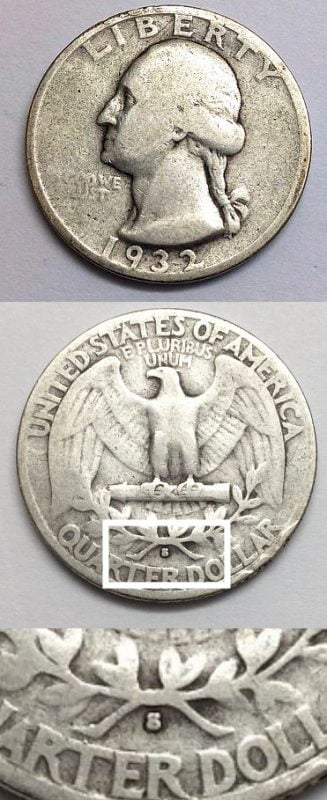
Just like Roosevelt dimes, Washington quarters are still used in today’s currency. Also like the Roosevelt dimes, only quarters from 1964 and older are 90% silver and are worth much more than face value.
The mintmark for this quarter is located on the reverse of the coin, beneath the wreath and above the “R” in quarter. Key dates to watch for on these coins are 1932-D and 1932-S.
Standing Liberty quarters
(1916-1930)
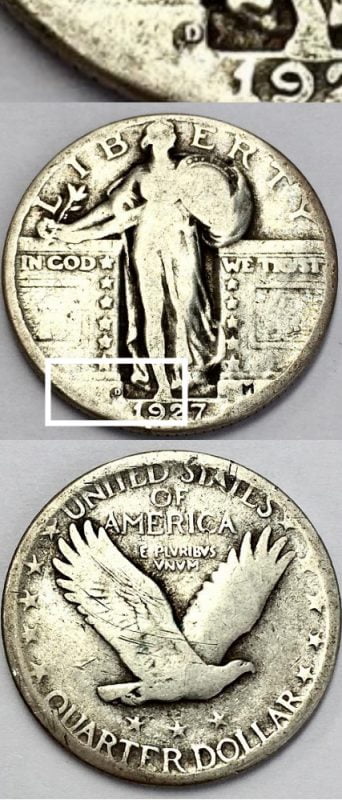
This 90% silver quarter has a mintmark location that is on the obverse of the coin, near the bottom, just above and to the left of the date.
Key dates to look out for include 1916, 1918-S 8/7, 1919-D, 1919-S, 1921, and 1923-S.
Barber quarters (1892-1916)
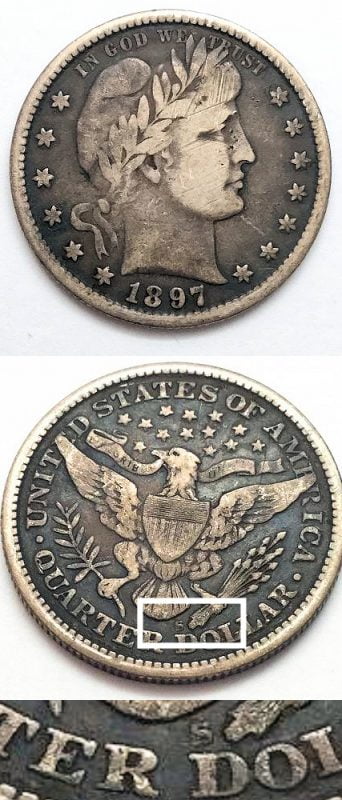
The mint mark for these 90% silver quarters is located on the reverse under the eagle’s tail. Key dates to look out for include 1896-S, 1897-S, 1901-S, 1913-S, and 1914-S.
Much older quarters that are less common include the Liberty Seated quarters from 1838-1891 and the Capped Bust quarters from 1815-1838.
Liberty Seated Quarter
( 1838-1891 )
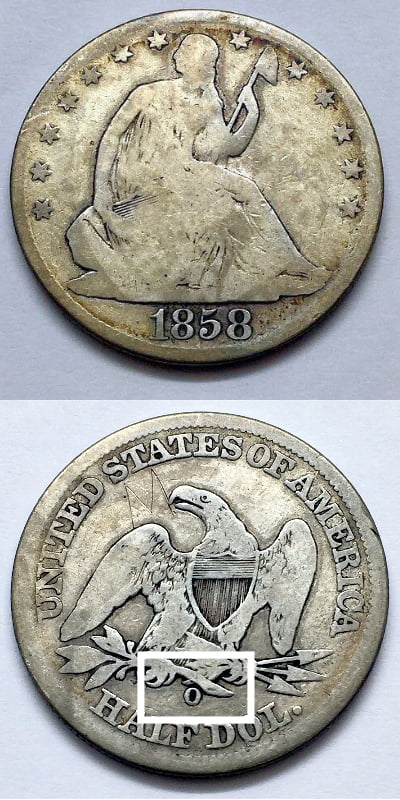
Liberty Seated quarters come in many varieties from 1838-1891. There are several varieties that exist for these quarters because of the design changes in the drapery, arrows, motto, and rays.
Type 1, No Drapery (1838-1840)
Type 2, No Motto (1840-1865)
Type 3, Arrows & Rays (1853)
Type 4, No Motto, Arrows at Date (1854-1855)
Type 5, With Motto (1866-1891)
Type 6, With Motto, Arrows at Date (1873-1874)
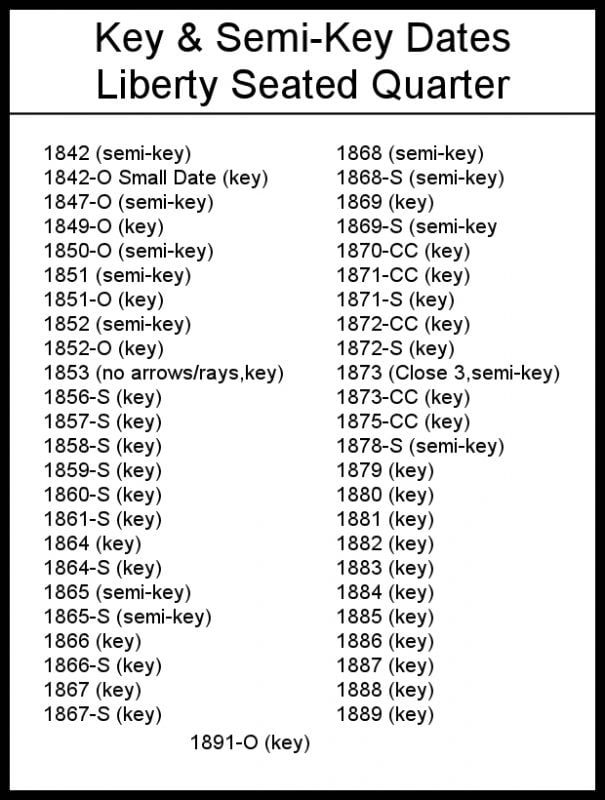
As with many coins, the value depends on several factors, including key and semi-key dates. For the Seated Liberty quarter, at the higher grades almost every date is of value with the key dates being worth tens or even hundreds of thousands of dollars, some dates to look out for are the following:
Capped Bust Quarters
(1815-1838)
The Capped Bust Quarter first appeared in 1815, and it is important to note that the Capped bust quarters come in two types: Type 1, Large Size from 1815 to 1828 and Type 2, Small Size from 1831 to 1838. The first type has generally lower mintage numbers than the second type.
There were a few gaps in the series where coins were not minted at all, as in the years, 1816, 1817, 1926, 1829, and 1830. It has been reported that only 4,000 coins were minted in 1827, but none of them are known to exist; the 1827 Capped Bust is a major rarity in both proof and/or re-strike. PCGS reports about one dozen original 1827/3 proofs and 20 re-strikes as far as mintage. Another very rare date for this coin series is the 1823/2 (with the 3 over a 2).
Although there are several dates within this range that are rare, these two dates are considered a major rarity! Relatively low mintages were the norm for this series. In key dates of higher grades many coins in this series have a high value, but some semi-key dates also worth noting are:
1815
1822 (25 over 50 cent)
1824 (4 over 2)
1825 (5 over 2)
1825 (25 over 50 cent)
1828 (25 over 50 cent)
Thank you for reading this second installment of our multi-part coin blog series! If you have any of these coins, and would like to get a free estimate, please call us at 860-355-0191.
Franklin Half Dollars
(1948-1963)
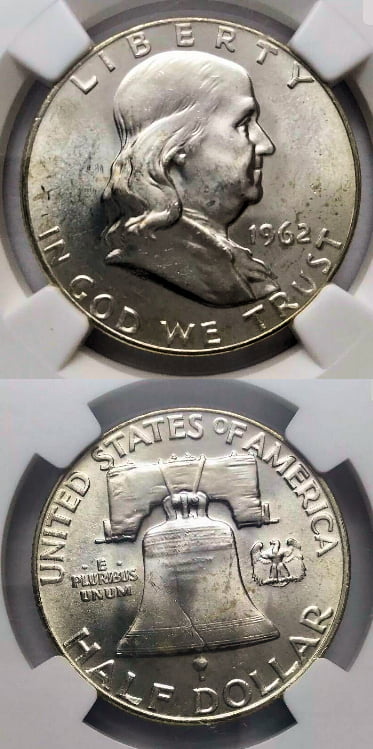
The mint mark for this 90% half dollar is located on the reverse of the coin, just above the top of the Liberty Bell. In average circulated condition these 90% half dollars are only worth melt value. You would have to have a high-grade mint state or proof Ben Franklin coin for it to be worth more than melt value.
Kennedy half dollars
(1964-present)
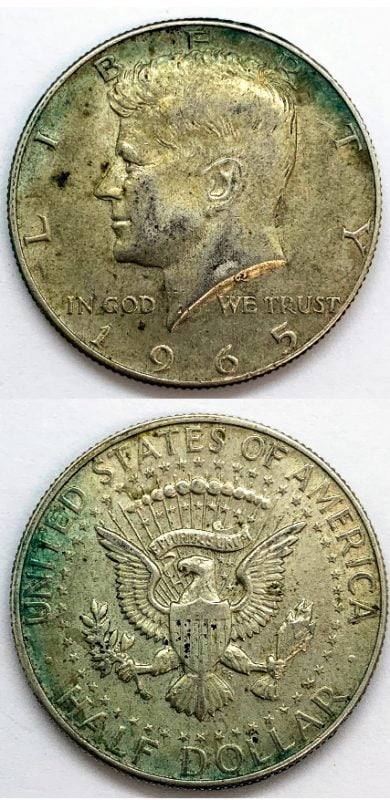
Kennedy half dollars can be 90% silver if they date from 1964 OR 40% silver if they are from 1965-1970. Many people have collected Kennedy half dollars over the years, including Kennedy half dollars that come in proof and mint sets.
(Proof and Mint sets will be discussed in detail in a later blog.)
Walking Liberty Half Dollars (1916-1947)
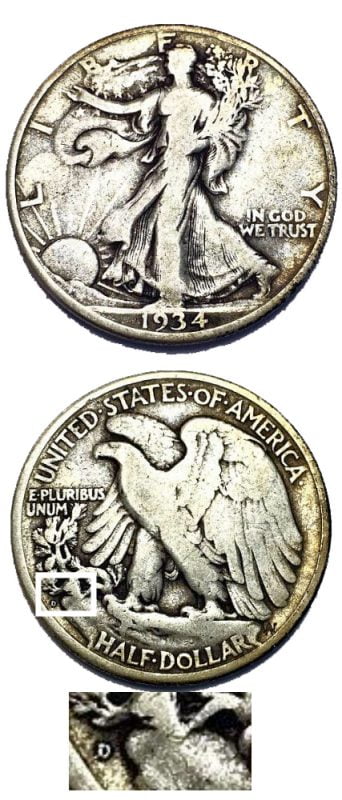
The mint mark for this 90% half dollar was moved after it was originally placed on the obverse (front of the coin).
In 1917 the mint mark was ordered to be moved to the reverse, a short distance from the left of the “H” in “HALF DOLLAR” around the 7 o’clock position. Key dates to look out for are 1916-S, 1921, 1921-D, 1921-S, and 1938-D.
Barber Half Dollars (1892-1915)
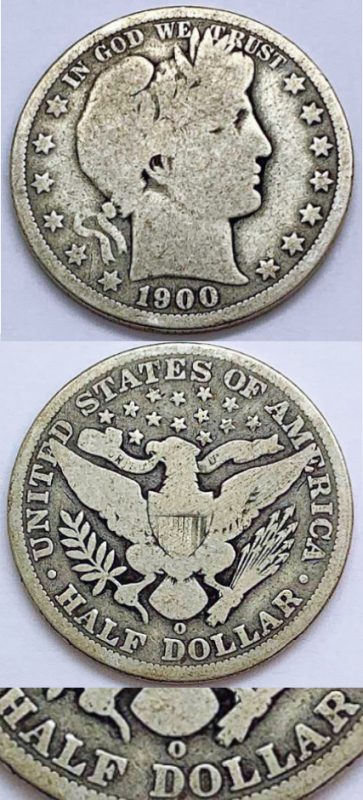
The mint mark for this 90% half dollar is located on the reverse of the coin, just below the eagle’s tail feathers and above the letter “D” in “DOLLAR”. The key dates are as follows: 1892-O, 1892-S, 1893-S, 1896-S, 1897-O, 1897-S, 1913, 1914, and 1915.
Older half dollars that are less common include the Liberty Seated half dollars from 1839-1891 and the Capped Bust Half dollar from 1807-1839.
Liberty Seated (1839-1891)
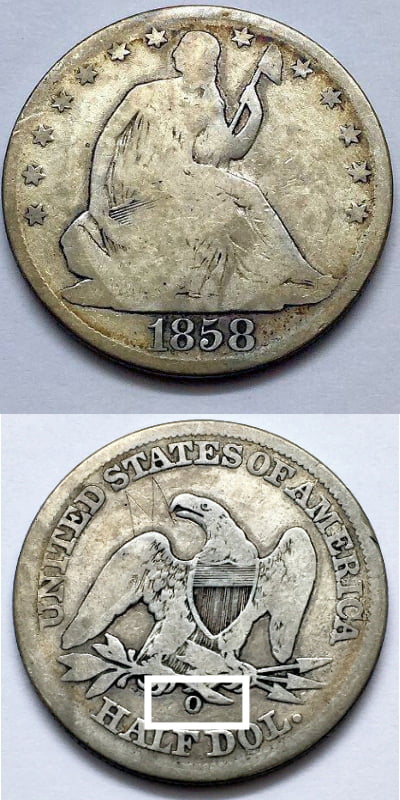
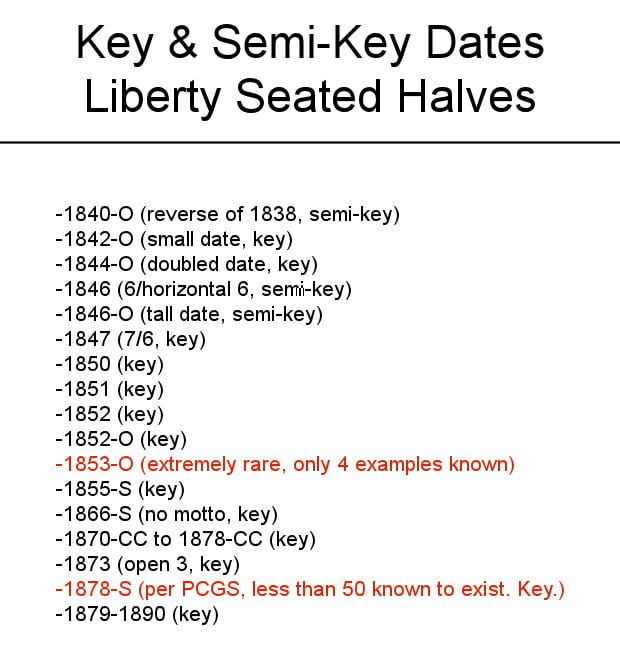
Several varieties exist for the Liberty Seated halves because of the design changes in drapery, arrows, motto, and rays. Although there are many common dates still widely available in the lower grades, it is very difficult finding much higher grade coins in the series.
In much higher grades, these coins become very rare and fetch tens of thousands of dollars. Key dates known to be worth hundreds of thousands of dollars in the higher grades include the 1839-No Drapery, the 1850 – No Motto, the 1866-S – No Motto, or the 1870-CC.
The varying types of Liberty Seated Halves are as follows:
Type 1, No Drapery (1839)
Type 2, No Motto, (1839-1866)
Type 3, Arrows and Rays (1853)
Type 4, No Motto, Arrows at Date (1854-1855)
Type 5, With Motto (1866-1891)
Type 6, With Motto, Arrows at Date (1873-1874)
As with many coins, their value depends on several factors, including key and semi-key dates. For the Liberty Seated Halves, almost every coin is of significant value at higher grades. Here are some key and semi-key dates to look out for even at lower grades:
Capped Bust Half Dollar
(1807-1839)
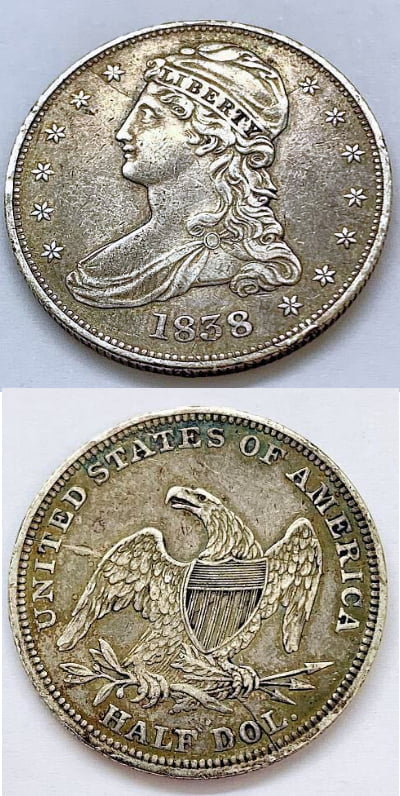
The Capped Bust Half Dollar first appeared in 1807 and it is important to note that these coins come in three different types. Type 1, Lettered Edge from 1807-1836, Type 2, Reeded Edge, “50 CENTS” on Reverse from 1836-1837, and Type 3, Reeded Edge, “HALF DOL.” on Reverse from 1838-1839. Many collectors refer to these coins as the “Bust Halves”.
As is to be expected from most coins from the early 19th century, finding high grade uncirculated coins are rare, which makes them worth tens of thousands of dollars. In some cases certain dates, types, or mint marks can be worth hundreds of thousands of dollars in the higher grades. Mintage for this series was relatively high with numbers in the millions. They stopped producing the U.S. silver dollar in 1804 and did not begin again until 1840 making the half dollar the denomination of choice for many depositors of silver.
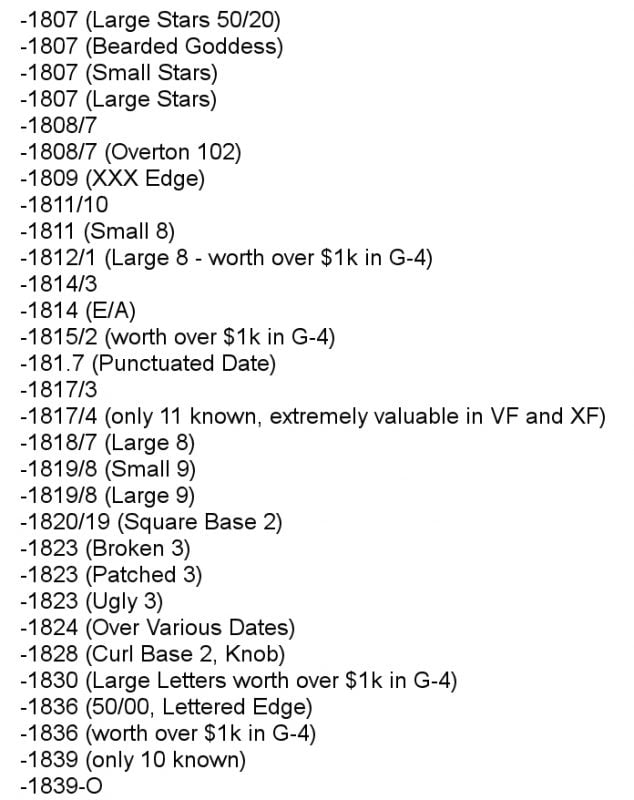
Another interesting fact about this series is there is a myriad of varieties and sub varieties that exist within the 3 different types that is unlike any other series. Besides the many expensive higher grade coins in this series some key and semi key dates to look out for in the lower grades are as follows. This list features coins valued at or above $100 for G-4 condition from PCGS at time of this publication:
Morgan Silver Dollars
(1878-1904, 1921)
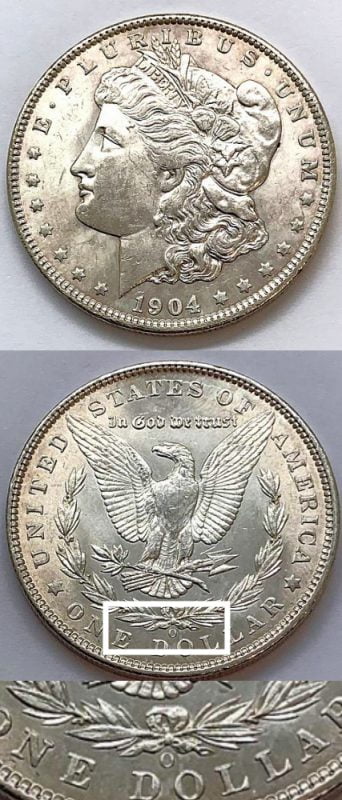
Pre-21 Morgan Silver dollars are 90% silver, and have a mint mark that is located on the reverse below the wreath above the letters “D-O” in the word “DOLLAR”.
Morgan Silver dollars were minted in five different mints including: Philadelphia, San Francisco, New Orleans, Carson City, and Denver, with Carson City Morgans being quite possibly the most desired and sought-after silver dollars of them all. The “CC” mint mark on the reverse above the wreath is something everyone likes to look for when holding a Morgan Silver Dollar in their hand. There are 14 different CC Morgans in total.
Key dates to look out for include: 1878-CC, 1879-CC, 1880-CC, 1881-CC, 1882-CC, 1883CC, 1884-CC, 1885-CC, 1888-CC, 1889-CC, 1890-CC, 1891-CC, 1892-CC, 1892-S, 1893, 1893-CC, 1893-O, 1893-S, 1894, 1895-O, 1895-S, 1899, 1902-S, 1903-O, and 1903-S.
Production originally ended for the Morgan in 1904, but was brought back for one year only in 1921 as a desire for the coin was renewed.
PEACE Silver Dollars
(1921-1935)
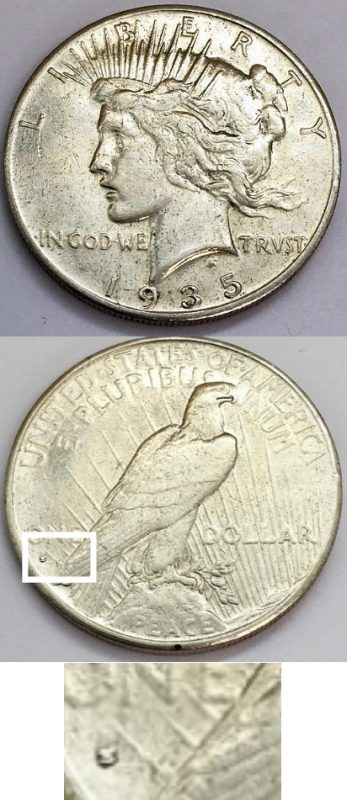
Peace Silver dollars are 90% silver. The “D” or “S” mint mark can be found on the reverse at the end of the feather tip, directly below the word “ONE”.
Key dates for the Peace Dollar include 1921, 1928, and 1934-S.
Thank you for reading this final installment of our multi-part U.S. coin blog series! Our next series will discuss proof & mint sets.
If you have any of these coins, and would like to get a free estimate, please call us at 860-355-0191.