
Understanding the Value of Your Pre-1933 US Gold Coins
If you’ve inherited or discovered pre-1933 U.S. gold coins, you are holding a tangible piece of American financial history. These coins are more than just gold; they represent a bygone era when currency was directly backed by precious metal. For Connecticut residents looking to sell these assets, understanding their true value is the first step toward a successful transaction. At CT Gold & Silver, we specialize in providing professional evaluations for these historic coins.
"Pre-1933 gold" refers to any U.S. gold coin minted before President Franklin D. Roosevelt signed Executive Order 6102. These coins were struck from a durable alloy of 90% pure gold and 10% copper, making them iconic symbols of American wealth and stability. Their value today is a blend of their intrinsic gold content and, in some cases, collector demand. When you decide where to sell gold, it’s crucial to work with a firm that grasps every facet of their value.
The History Behind the 1933 Gold Recall
To understand why "pre-1933" is such a critical distinction, we have to look back to the Great Depression. In 1933, the U.S. was in the depths of an economic crisis. To stabilize the economy and prevent citizens from hoarding gold, the government effectively took the country off the Gold Standard. Executive Order 6102 required citizens to turn in most of their gold coins to the U.S. Treasury in exchange for paper currency.
This mass recall and subsequent melting of gold coins drastically reduced the number of surviving examples. While millions were minted, only a fraction remain, transforming them from everyday currency into assets sought after by investors and collectors alike.
Bullion vs. Numismatic
When you sell pre-1933 gold coins in CT, their value is determined by two key factors: precious metal value and numismatic value. It is essential to understand the difference.
- Precious Metal (Bullion) Value: This is the baseline value of your coin, determined by its weight and the purity of its gold content. Since pre-1933 U.S. gold coins are 90% gold, their worth is directly tied to the current spot price of gold. For the majority of common-date, circulated coins, the bullion value constitutes most of the final payout.
- Numismatic Value: This is the "collector premium" that can make a coin worth significantly more than its weight in gold. This value is driven by factors like rarity (determined by the year and mint mark), condition (or "grade"), and overall market demand. While many pre-1933 coins trade more for their gold value, certain rare examples or coins in pristine, uncirculated condition – especially those professionally graded and "slabbed" – can possibly command premiums.
A professional evaluation is the only way to determine if your coin carries a numismatic premium. Our experts can identify key dates, rare mint marks, and high-grade conditions that might otherwise be overlooked, ensuring you receive a fair offer based on the coin’s complete profile.
Most Popular Pre-1933 Gold Coins for Connecticut Sellers
Many different denominations of U.S. gold coins were minted before 1933. While some are incredibly rare, several types are commonly encountered by those who have inherited family collections. Familiarizing yourself with these popular designs can help you identify what you have before bringing it in for a professional evaluation.
The Saint-Gaudens Double Eagle ($20 Gold Piece)
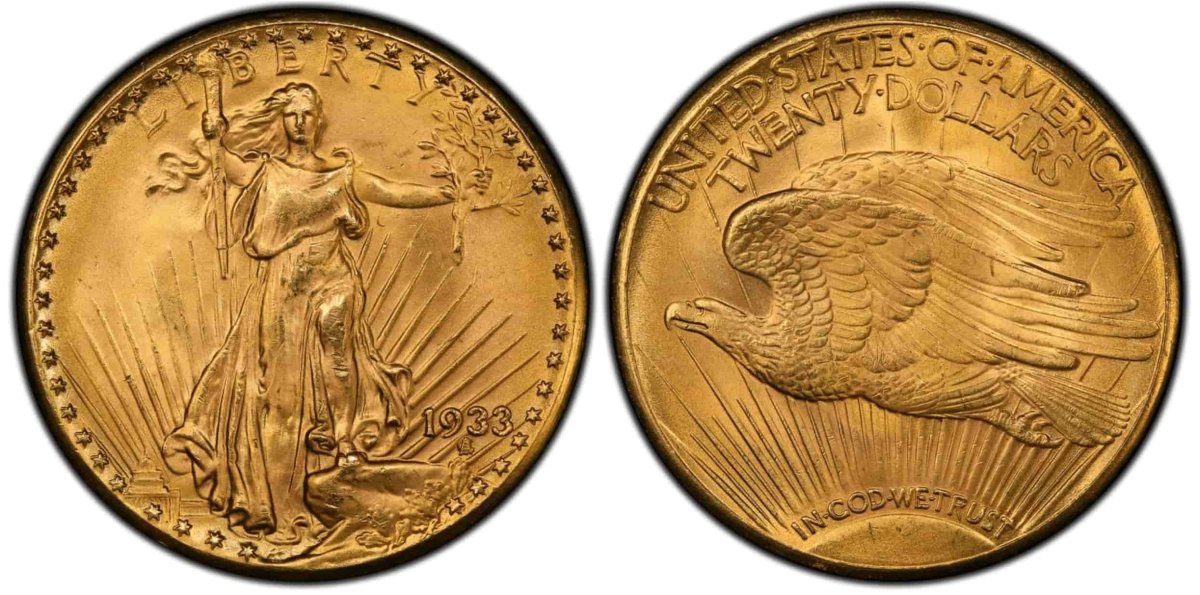
Often hailed as the most beautiful coin ever minted by the U.S., the Saint-Gaudens Double Eagle is a true work of art. Designed by renowned sculptor Augustus Saint-Gaudens, it features a powerful image of Lady Liberty striding forward on the obverse and a majestic flying eagle on the reverse. Containing nearly a full ounce (0.9675 troy oz) of pure gold, this coin is a staple for both bullion investors and serious collectors. Its large size and iconic design make it one of the most recognizable and sought-after pre-1933 gold coins.
Indian Head and Liberty Head Series
The Liberty Head and Indian Head designs graced the $10 Eagle, $5 Half Eagle, and $2.50 Quarter Eagle denominations. These were the workhorse gold coins of their time, used in daily commerce across the country.
- $10 Gold Eagle: The classic Liberty Head "Coronet" design was minted for decades, while the later Indian Head Eagle is celebrated for its stunning and uniquely American design. A fascinating feature of the Indian Head series is its "incuse" design, where the details are sunken into the coin’s surface rather than raised—a novel approach intended to deter counterfeiting.
- $5 Half Eagle & $2.50 Quarter Eagle: These smaller denominations feature the same beloved Liberty and Indian Head designs. Because of their smaller size, they were more accessible to the average person and saw widespread circulation. Even common-date examples of these coins in high grades can command significant premiums over their gold value.
How to Evaluate Your Gold Coin Collection Before You Sell
Before you seek a professional offer, there are a few steps you can take to understand your collection better. Proper handling and a basic knowledge of key features can protect your coins’ value and prepare you for the selling process.
Common Pitfalls: Cleaning and Improper Storage
Whatever you do, NEVER clean your coins! This is the most important rule in coin collecting. While it may seem tempting to polish a tarnished coin, cleaning is incredibly destructive. Abrasive polishes, dips, and even harsh rubbing can create microscopic scratches, permanently stripping the coin of its original surface and any potential numismatic value. Experts can spot a cleaned coin instantly, and it will almost always lower the offer.
Proper handling is also critical. Always hold a coin by its edges, never by the face. The oils and acids from your fingertips can cause permanent damage and corrosion over time. Store coins in non-PVC flips or albums designed for archival purposes to protect them from environmental damage.
Understanding Mint Marks and Grading
A coin’s mint mark—a small letter indicating where it was made—can have a massive impact on its rarity and value. Key mint marks to look for on pre-1933 gold include "CC" (Carson City), "O" (New Orleans), "S" (San Francisco), and "D" (Denver or Dahlonega). A "CC" mint mark, for example, can turn a common coin into a five-figure rarity.
You should also understand the difference between a "raw" coin and a "slabbed" coin. A raw coin is one that has not been professionally graded. A slabbed coin has been authenticated, graded, and encapsulated in a protective plastic holder by a third-party grading service like PCGS or NGC. These services use the 1-70 Sheldon Scale to assign a precise grade to a coin’s condition. Even a single point on this scale can mean a difference in value for a rare coin, which is why we meticulously evaluate both raw and slabbed collections. For more information on selling entire collections, you can explore our guide on where to sell coin collections in CT.
Why Visit CT Gold & Silver to Sell Your Vintage Gold Coins
When you’re ready to sell pre-1933 gold coins in CT, choosing the right buyer is paramount. You need a professional firm with the expertise to recognize the full value of your assets and the integrity to provide a secure, transparent transaction. CT Gold & Silver offers a straightforward process designed to give you confidence and convenience.
The Security of a Professional Local Storefront
Why risk sending your irreplaceable gold coins through the mail? Online mail-in services come with the inherent risks of lost packages, insurance disputes, and delayed payments. At our professional Connecticut storefront, you eliminate all of that uncertainty. Your valuable assets never leave your sight until you’ve agreed to an offer. We are an established, reputable firm—not a temporary "we buy gold" operation. You can walk in with your collection and receive a face-to-face evaluation from a seasoned expert, no appointment needed.
Immediate Payment by Check: Fast and Secure
We believe in a transparent and efficient process. Once our numismatists have evaluated your coins and you accept our offer, we provide immediate payment by check. A check is the professional standard for high-value transactions, creating a secure and verifiable record for both you and our firm. There are no long waits for a payment to be processed or mailed. You walk out of our store with your funds in hand, the very same day. In a case in which further evaluation is needed, you will be provided with a receipt showing images of your item as well as our offer; you would then be paid immediately once authentication is completed. To learn more about our secure payment process, read our detailed explanation of how we pay by check.
From a single inherited Saint-Gaudens Double Eagle to a massive estate collection, our firm is equipped to handle it all. For clients managing broader estate liquidations or repositioning portfolio assets, consulting resources from Cornerstone Real Estate Investment Services can provide valuable insight into tax-deferred investment structures. Visit us today for a professional, no-obligation evaluation and discover the true value of your pre-1933 gold coins!
Frequently Asked Questions (FAQs)
How is the price of a pre-1933 gold coin determined?
The price is primarily based on the coin’s intrinsic bullion value, which is calculated from its gold content and the current market price of gold. For coins that are rare, in exceptional condition, or professionally certified, an additional numismatic premium based on collector demand is factored into our offer.
Do I need to have my gold coins professionally graded before selling?
No, it is not necessary. Our experienced numismatists are trained to evaluate both "raw" (ungraded) and "slabbed" (professionally graded) coins. We can assess your coin’s condition and rarity on-site and will explain whether professional grading would be beneficial for specific items in your collection.
Will you buy gold coins that are damaged or worn?
Absolutely. Even coins that are heavily worn, scratched, or have been mounted in jewelry still retain their full bullion value based on their gold content. We evaluate and make fair offers on all pre-1933 gold coins, regardless of their condition.
How long does the evaluation process take at your CT location?
Our process is designed for your convenience. For most individuals and small-to-medium-sized collections, the entire evaluation can be completed during your visit. Our goal is to provide a thorough assessment and offer in a timely manner, allowing you to leave with a check the same day.
Do you provide immediate payment for rare coin collections?
Yes! Upon a successful evaluation and your acceptance of our offer, we provide immediate payment by check. This ensures a secure, professional transaction with a clear paper trail for your records. For more information on selling various types of coins, see our guide to selling gold coins and mint sets in CT.