
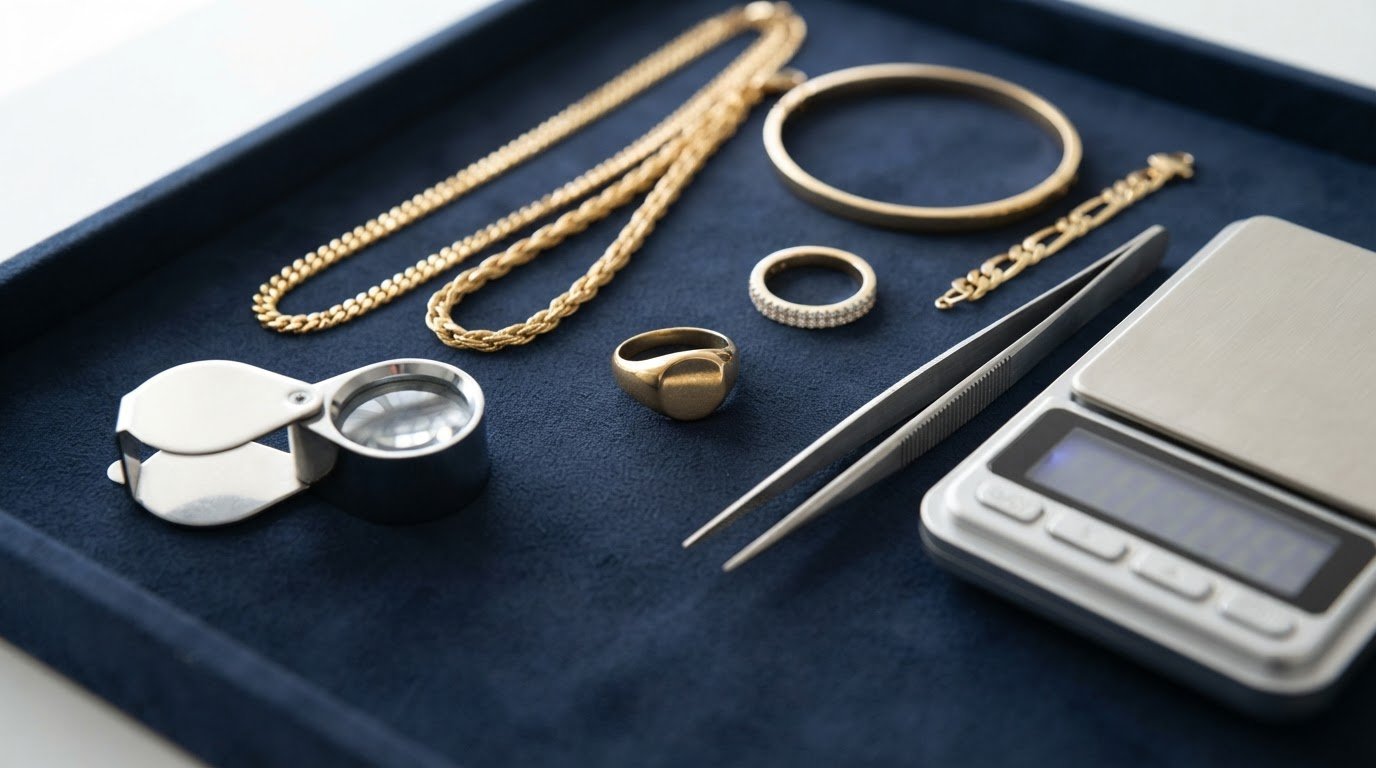
If you are wondering how to avoid gold party buyback scams, the most effective strategy is simple: avoid gold parties and traveling hotel buyers altogether. While turning an evening with friends or a visit to a local hotel ballroom into a selling opportunity may sound convenient, these informal venues frequently expose sellers to undervalued offers, hurried transactions, and high-pressure tactics. Selling precious metals requires precision, specialized equipment, and verifiable accountability—qualities rarely found in someone’s living room or a temporary conference suite.
Every piece of gold jewelry, bullion coin, or family heirloom carries measurable value based on its pure metal weight and real-time market pricing. When evaluating offers, you deserve complete visibility, experienced customer service, and unhurried evaluations. In this guide, you will learn why pop-up gold buyers and living room buying events put your valuables at risk, how to recognize the warning signs of questionable practices, and how choosing an established Connecticut physical storefront protects your bottom line.
Key Takeaways
- Avoid Gold Parties and Hotel Buyers: Informal events and traveling hotel roadshows rely on social pressure and temporary setups that disadvantage the seller.
- Demand Full Transparency: Professional evaluations must happen directly in front of you, with clear karat testing, calibrated scales, and itemized calculations.
- Watch for Concealed Testing: Never accept offers where jewelry is bundled together into a single lump sum or tested out of sight.
- Choose Established Connecticut Storefronts: Dedicated physical locations offer accountability, superior customer service, and immediate payment by check.
Gold Party Buyback Scams in Connecticut: What Should Sellers Watch For?
Gold parties have gained popularity across Connecticut as social events where guests bring scrap jewelry, broken chains, and unwanted rings to sell to a visiting buyer. The host typically receives an incentive or cut of the total sales, creating an atmosphere where guests feel obligated to participate. However, this informal environment is precisely what makes gold parties problematic. The friendly setting distracts sellers from scrutinizing testing procedures, weighing accuracy, and market formulas.
When you attend a gold party, the lines between personal hospitality and commercial transactions blur. A legitimate precious metals assessment demands technical precision. When you sell gold, each item must be categorized by karat fineness, weighed on a certified legal-for-trade scale, and evaluated against the prevailing spot price. At a party, items are often tossed onto a single tray, weighed as a bundle, and assigned an arbitrary flat rate. Sellers walk away with a fraction of what their items are worth, all under the guise of an easy, fun evening. If you want to understand professional standards, explore our comprehensive guide on choosing professional gold buyers.
Why a Friendly Setting Does Not Replace a Clear Evaluation
Social dynamics work against sellers at private parties. You might feel awkward challenging an offer in front of friends, neighbors, or colleagues. If you express hesitation, the buyer or even the host may encourage you to "just take the deal" so the group can hit a bonus tier. This psychological pressure is deliberate. It discourages sellers from doing what every smart consumer should do: pause, ask for itemized paperwork, and compare rates.
Furthermore, party buyers frequently operate with minimal overhead and no permanent presence in your community. Because they are not bound to a physical storefront with an established local reputation, their primary objective is to acquire the maximum volume of precious metal at the absolute lowest cost before moving on. Convenience should never come at the expense of an honest, transparent appraisal.
The Hidden Trap of Hotel Gold Buyers and Pop-Up Roadshows
Just as problematic as in-home parties are the traveling "hotel gold buyers" that regularly advertise in local newspapers and flyers. These traveling operations rent a conference room at a local hotel for two or three days, claiming to offer exclusive pricing for estate items, antique coins, and scrap gold. Once the weekend ends, the buyers pack their bags, vacate the premises, and leave the state.
Dealing with traveling hotel buyers carries substantial risks:
- Zero Long-Term Accountability: If you realize days later that your jewelry was undergraded or underweighed, you have no physical storefront to visit. The buyers are already gone.
- Rushed Decisions: Hotel buyers use the ticking clock of their departure date to force immediate choices. They know you cannot easily seek a second opinion before their pop-up event concludes.
- Massive Operating Spreads: Pop-up roadshows incur massive advertising and travel expenses. To pay for full-page newspaper ads and hotel suites, they offset costs by offering sellers deeply discounted rates on their precious metals, sometimes as low as 50% of the melt value.
Instead of trusting a temporary hotel setup, sellers achieve far safer, more profitable results by working directly with dedicated local experts. Review our insights on selling gold in Connecticut to see how an established commercial presence safeguards your transaction.
What a Transparent Gold Sale Should Make Understandable
A reputable transaction is clear, methodical, and verifiable at every stage. Transparency is not a marketing buzzword; it is a visible, repeatable process. In an authentic evaluation, the buyer walks you through every action:
First, each piece of jewelry must be tested individually for purity. Ten-karat (10k), fourteen-karat (14k), and eighteen-karat (18k) gold – th ethree most commonly seen purities in the US – contain distinctly different percentages of pure gold—41.7%, 58.3%, and 75%, respectively. These items must never be mixed together during testing or weighing.
Second, weights should be recorded in precise increments—typically troy ounces, grams, or pennyweights (dwt)—on an unobstructed digital scale calibrated for trade. You should be able to look directly at the digital readout. The buyer should clearly explain how the current market spot price applies to your net gold weight after subtracting non-gold components like stones, base-metal springs, or enamel.
Gold Party Warning Signs: Pressure, Unclear Testing, and Unexplained Offers
Learning how to avoid gold party or hotel buyback scams requires spotting specific behavioral and technical red flags. Disreputable operations rely on ambiguity to preserve their profit margins. When buyers obscure the testing process or use aggressive sales language, step back and retain possession of your items.
Rapid, Concealed Testing and Uncalibrated Scales
The most widespread warning sign at gold parties and hotel pop-ups is obscured testing. If a buyer takes your jewelry behind a portable folding screen, behind an open briefcase, or beneath the edge of a table, stop the evaluation. There is no legitimate reason to hide testing from a client.
Pay close attention to the testing methods being used:
- Aggressive Scratching: Acid scratch testing on a slate stone is common, but it should be done gently and minimally. Inexperienced or aggressive buyers can needlessly damage fine jewelry.
- Concealed Scales: Scales should be in clear view of the client; items should never go into a different room or be obscured.
- Unclear Units of Measurement: Beware of buyers who switch between grams, pennyweights, and standard ounces without explaining the conversion. A pennyweight (1.555 grams) is heavier than a single gram; misrepresenting these units allows unscrupulous operators to drastically underpay.
Lump-Sum Bids and Social Pressure Tactics
Another major tactic employed by gold party hosts and hotel buyers is the "lump-sum bundle." Rather than detailing the value of each piece, the buyer aggregates your entire collection into a single pile and states a flat number. They might say, "I can give you five hundred dollars for the whole box."
This tactic conceals valuable items inside a collection of scrap metal. Your lot might include a high-purity 18k chain, a designer signature piece, or an item with exceptional secondary-market demand. By combining everything into an unexplained lump sum, the buyer obscures how much each individual piece contributes to the total. When you ask for a breakdown, evasive buyers will often brush off the question or claim the calculation is "proprietary." An ethical, transparent buying firm like CT Gold & Silver is always willing to give you both a total sum and a breakdown by piece if you request it.
Additionally, watch out for high-pressure language designed to prevent comparison shopping:
- "This offer is only valid while I am sitting at this table tonight."
- "Gold prices are about to drop tomorrow, so you must sell right now."
- "We have already calculated the paperwork; backing out now complicates the host’s party."
A legitimate buyer never relies on panic, guilt, or artificial deadlines. Gold market pricing fluctuates constantly during active trading hours, but an honest quote remains reasonable without resorting to intimidation.
Questions That Pop-Up Buyers Refuse to Answer
You can quickly gauge the integrity of any buyer by asking straightforward, factual questions. Pop-up buyers and party organizers often rely on vague responses when pressed for technical specifics. Consider how they handle these direct inquiries:
- "Can you show me the exact weight of each purity group on the scale?" If they resist separating your items by karat before weighing, they are cutting corners.
- "What percentage of the current gold spot price does this offer reflect?" Professional buyers know their payout formula and have no reason to hide the spread between market value and their purchasing margin.
- "Can I take this written itemization with me to consider tomorrow?" If they refuse to provide a written breakdown or insist that leaving voids your evaluation, walk away.
| Evaluation Factor | In-Home Gold Party / Hotel Pop-Up | Established Storefront (CT Gold & Silver) |
|---|---|---|
| Testing Location | Often concealed behind cases, tables, or screens | 100% visible directly on the counter in front of you |
| Scale Visibility | Obscured, uncertified, or digital readout turned away | Certified, trade-legal digital scale with dual clear readouts |
| Valuation Method | Unexplained lump-sum offers; vague karat categorization | Itemized by karat, measured weight, and spot price formula |
| Sales Pressure | High pressure, peer expectations, "today only" urgency | Zero pressure; transparent guidance; freedom to decline |
| Payment Method | Informal payment structures, often lacking itemized receipts | Immediate payment by check with complete transaction records |
| Accountability | Transient; buyer departs after the event or weekend | Permanent physical locations established across Connecticut |
Before Accepting a Gold Party Offer, Use This Checklist
If you find yourself invited to a gold-buying event or are tempted to drop by a hotel roadshow, pause and protect your interests. The simplest advice is to decline the invitation and keep your jewelry at home. If you do find yourself evaluating an offer, run through this checklist before surrendering a single item.
- Separate Your Items at Home First: Use a magnifying glass to locate hallmark stamps (.417 for 10k, .585 for 14k, .750 for 18k, or standard karat stamps). Separate your collection into distinct bags by purity so you arrive knowing what you possess.
- Weigh Your Valuables in Advance: Even an inexpensive kitchen scale provides a general baseline in grams. If a party buyer tells you a heavy Cuban chain weighs significantly less than your home baseline, do not proceed.
- Check the Daily Spot Price: Check the current spot price per troy ounce of pure gold before interacting with any buyer. Knowing whether the metal market is trading high or experiencing a temporary dip puts offers into context.
- Demand an Open Counter: Insist that all testing acids, electronic testers, and weighing scales remain in plain sight. If the buyer moves items out of your direct line of vision, politely gather your jewelry.
- Refuse the "All-or-Nothing" Bundle: Require the buyer to write down an individual value for each item. If they refuse to evaluate a pendant separately from a pair of earrings, they are concealing their margin.
- Step Away and Sleep on It: Never agree to a sale on the spot at an informal gathering. Reputable buyers respect your need to think over a transaction.
Essential Steps to Protect Your Valuables
Documenting your items is vital. Take clear smartphone photographs of hallmarks, maker marks, gemstones, and overall pieces before showing them to an unfamiliar buyer. At crowded gold parties, items can easily be misplaced, dropped, or mixed into another attendee’s pile. Keeping a photo inventory guarantees you retain an accurate record of what you brought to the room.
If your jewelry includes diamonds or gemstones, bear in mind that most party buyers focus solely on scrap gold weight. They may assign zero value to the stones, or worse, pop them out with pliers right in front of you, damaging the settings. If you hold fine estate jewelry, designer signatures (such as Tiffany & Co. or Cartier), or precious gems, selling them at a scrap party results in major value losses; specialized retailers like Heirloom Jewelers demonstrate how fine estate craftsmanship and quality gold pieces hold value well beyond simple scrap melt.
Why Walking Away Is Your Best Move
Walking away from a bad transaction costs you nothing. Your jewelry does not spoil, and genuine gold retains enduring intrinsic worth. When an itinerant buyer or party organizer insists that their offer is an extraordinary opportunity you cannot afford to miss, that is your signal to pack your belongings.
You have zero legal or social obligation to accept an offer simply because someone spent five minutes looking at your jewelry. Politely thank the host, put your items back into your purse or pocket, and head home. The moment you leave an environment driven by artificial urgency, you regain control over your property and your financial choices. At CT Gold & Silver, there is never an obligation to sell; we will clearly state what the gold spot price is, and explain that while the price may change with the gold market, our percentage will not.
The CT Gold & Silver Difference: Evaluation and Payment by Check
The safest, most profitable alternative to high-pressure buyback events is doing business with a dedicated physical storefront. Connecticut residents do not need to rely on transient buyers, nor do they need to take the risks associated with mailing precious family assets through the postal service.
CT Gold & Silver provides a professional, welcoming environment dedicated entirely to purchasing gold jewelry, sterling silver, bullion coins, luxury timepieces, and high-value collectibles. Operating through physical locations in Connecticut, our business is built upon transparency, accountability, and unmatched customer service. We do not conduct business through online mail-ins or pop-up events; we believe clients deserve face-to-face evaluations with experienced professionals.
Compare a Gold Party or Hotel Buyer with an Established Connecticut Storefront
When you walk into a permanent CT Gold & Silver location, you immediately notice the difference. You are not seated in someone’s living room or standing in a crowded hotel corridor. You are in a secure commercial facility equipped with industry-standard analytical instruments.
Our specialists perform every assessment directly in front of you on clean counters. We separate your items by karat fineness, explain the testing methods we use, and weigh each grouping on calibrated scales. There are no mysterious or unexplained deductions, no hidden handling fees, and no pressure to finalize a transaction.
To learn more about our secure payment processing, read how CT Gold & Silver pays you securely by check.
CT Gold & Silver’s Dedication to Transparency and Customer Service
Customer service and client education form the bedrock of our business model. We recognize that selling personal jewelry or inherited family pieces can feel overwhelming. Many sellers have never had gold evaluated before and may be concerned about being misled.
Our specialists take the time to answer every inquiry thoroughly. If an item is stamped incorrectly or turns out to be gold-plated rather than solid gold, we show you the testing results and explain the science behind them. If your collection contains rare numismatic coins or designer jewelry that commands a premium above standard scrap value, we ensure those unique attributes are properly factored into our evaluation.
Because we operate as a high-volume professional purchasing firm, we are proud to offer some of the top prices for precious metals in the state. We do not provide loans, retail merchandise, or jewelry repair services—if you wish to preserve or service valued heirlooms rather than sell them, dedicated workshops like Atoz Watch And Jewellery Repairs handle watch and jewellery maintenance. Our sole focus is purchasing precious metals and fine collectibles efficiently, securely, and transparently.
Frequently Asked Questions
Are all gold parties scams?
While not every gold party host acts with malicious intent, the format itself is fundamentally structured to benefit the buyer and the host at the expense of the guest. The social atmosphere, lack of precision scales, peer pressure, and rushed lump-sum offers make it almost impossible for sellers to receive true market value. For an accurate and fair transaction, avoiding gold parties entirely is your best protection.
Why are hotel gold buyers considered risky?
Hotel gold buyers operate transient pop-up businesses. They rent a local conference room for a brief weekend, launch aggressive advertising campaigns, and leave town immediately after the event closes. If you discover an error in your evaluation, have questions about your payout, or realize items were undergraded, you have no physical storefront to return to for resolution.
How does a professional buyer test gold accurately?
A reputable buyer uses non-destructive testing methods, such as calibrated electronic gold testers, precision acid tests on touchstones, or X-ray fluorescence (XRF) analyzers. Crucially, the testing happens entirely in front of the customer. Each item is sorted according to its specific karat purity before being placed on a certified, legal-for-trade scale with a display visible to the client.
Can I reject an offer after my jewelry has been evaluated?
Yes, absolutely. An evaluation carries no obligation. At an established business like CT Gold & Silver, you maintain complete ownership of your items throughout the visit. If you choose not to accept an offer, our staff will gladly return your jewelry immediately, with no fees, no hassle, and no pressure.
How do I receive payment when selling to CT Gold & Silver?
When you finalize a sale at one of our physical Connecticut storefronts, we issue an immediate payment by check. All transactions are fully documented with an itemized breakdown for your financial records, ensuring complete safety, legal compliance, and total peace of mind.
Choose a Safer, More Transparent Selling Experience
Navigating the precious metals marketplace does not have to be confusing or stressful. While living room gold parties and temporary hotel buying events promise casual convenience, they routinely shortchange consumers through hurried valuations, obscure testing practices, and unavoidable social pressure. Your valuable gold jewelry, bullion, and estate heirlooms deserve an honest, professional assessment conducted by experienced specialists.
At CT Gold & Silver, our commitment to transparent evaluations, exceptional customer service, and community trust sets us apart as one of the top precious metals purchasing firms in the region. We invite you to bypass the uncertainty of pop-up events and visit one of our permanent Connecticut storefronts. Bring your items in today for an unhurried, transparent evaluation and receive immediate payment by check.
Visit a CT Gold & Silver location for an in-person gold jewelry evaluation