
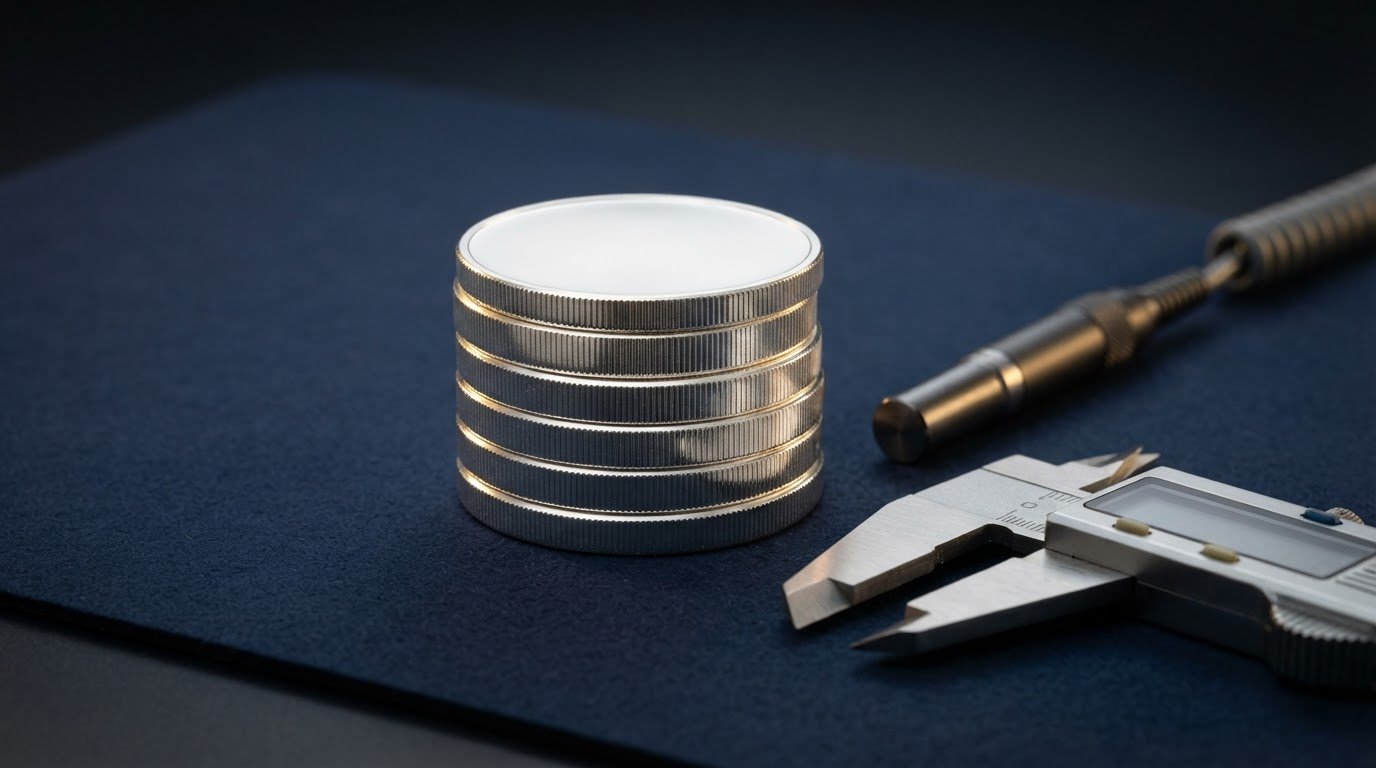
Silver rounds remain one of the most accessible and liquid vehicles for investing in physical precious metals. However, the modern bullion market has seen a sharp influx of sophisticated counterfeits. These fakes often replicate official mint strikes, frosted finishes, and standard .999 fine silver markings with astonishing accuracy. If you are researching how to detect counterfeit silver rounds before selling, you have likely encountered a wide array of basic home tests—ranging from magnet slides and ice cubes to digital calipers and resonance ping apps.
While preliminary screening at home sometimes helps to identify crude base-metal fakes, home methods cannot provide absolute certainty. Advanced counterfeits now employ heavy silver plating over copper, brass, tungsten, or lead alloys designed to mimic the exact weight, acoustic timbre, or diameter of a genuine one-troy-ounce round. Attempting to force an answer at home through destructive testing or inconclusive scratch checks risks damaging genuine rounds and lowering their resale value.
The definitive solution is non-destructive, commercial-grade technology. At CT Gold & Silver, we provide completely free in-store evaluations across our physical Connecticut locations. Using state-of-the-art diagnostic instruments—such as the Sigma Metalytics Precious Metal Verifier and advanced X-Ray Fluorescence (XRF) analyzers—our specialists verify the purity, metallic composition, and structural integrity of your silver rounds right in front of you. You receive total transparency, definitive answers, and immediate payment by check if you choose to sell, all without spending a dime on testing fees.
Key Takeaways: Verifying Silver Rounds
- Home checks are screening tools, not final verdicts: Measurements, magnet reactions, and visual checks can identify red flags, but they cannot prove a round is authentic through the core.
- In-store diagnostic testing is 100% free: CT Gold & Silver provides free, zero-obligation evaluations in person for all silver bullion and rounds.
- Advanced technology eliminates guesswork: Sigma Metalytics verifiers inspect subsurface conductivity & density, while XRF analyzers establish precise elemental purity without scratching or acid damage.
- Local evaluation outperforms mail-in delays: Unlike sending bullion through the mail to distant online brokers, visiting a physical Connecticut buyer provides real-time verification and immediate payment by check.
Preliminary Home Checks: Screening Your Rounds Safely
Before bringing your collection in for a professional evaluation, performing a few non-invasive checks at your kitchen table can help you organize your inventory and identify obvious discrepancies. Understanding how to detect counterfeit silver rounds before selling begins with establishing whether the round matches standard physical baselines. Authentic private-mint bullion rounds—such as those produced by Sunshine Minting, SilverTowne, or Golden State Mint—generally follow standardized production dimensions and weight tolerances.
Always handle your rounds by the edges, preferably wearing cotton or nitrile gloves. Never scrub, polish, or scrape the metal, as altering the surface condition can diminish commercial value. Your goal at home is simply to gather observational data before confirming your findings with scientific equipment.
Marking and Dimension Verification
Every standard investment round should clearly state its weight and purity, typically reading "1 oz .999 Fine Silver" or similar wording. Compare these inscriptions against the manufacturer’s official specifications using a high-resolution reference image. Counterfeits frequently display font variations, irregular letter spacing, uneven rim heights, or soft, mushy strike details where sharp relief should appear.
Next, check the physical dimensions using a digital scale accurate to one-hundredth of a gram (0.01g) and a pair of plastic or brass digital calipers:
- Weight: A genuine one-troy-ounce silver round must weigh approximately 31.103 grams. If a round weighs significantly less (e.g., 28 grams), it may be struck to an avoirdupois ounce rather than a troy ounce, or composed of cheap base metals. If it weighs noticeably more, the strike may be oversized to compensate for lower-density metals.
- Diameter and Thickness: Standard 1 oz rounds measure roughly 39 mm in diameter and between 2.8 mm and 3.2 mm in thickness, depending on the mint’s die design. Because base metals such as copper and brass are less dense than pure silver (silver has a specific gravity of 10.49 g/cm³), a counterfeit made of copper must be either significantly thicker or broader in diameter to reach the required 31.1 grams.
The Neodymium Magnet and Sound Checks
Silver is diamagnetic, meaning it does not attract a magnet. In fact, pure silver gently repels a moving magnetic field. Placing a strong N52 neodymium magnet on a tilted silver round should cause the magnet to slide slowly down the surface rather than free-falling or sticking firmly.
If the magnet snaps directly onto the round, the piece contains substantial iron, nickel, or steel content and is undeniably fake. However, a round that shows no attraction is not automatically genuine. Non-magnetic base metals – including copper, zinc, lead, and brass – also fail to attract a magnet. Furthermore, acoustic "ping" tests, where a round is lightly tapped to evaluate its resonant sustain, can be easily misinterpreted. Slight variations in round thickness, die relief, or internal stress can alter the pitch, leading to false negatives or misleading confidence.
In-Store Evaluations with CT Gold & Silver
When basic home tests leave you uncertain, specialized instrumentation provides definitive clarity. At CT Gold & Silver, our primary non-destructive line of defense against counterfeit silver rounds is the Sigma Metalytics Precious Metal Verifier (PMV). This device is recognized throughout the precious metals industry as an essential tool for separating genuine bullion from deceptive fakes.
Unlike surface-level inspections, the Sigma Metalytics verifier assesses the bulk electromagnetic characteristics of the entire piece. It allows our evaluators to verify your bullion in seconds without damaging the coin, scratching the rim, or utilizing corrosive chemicals.
How the Sigma Verifier Operates
The Sigma PMV operates using eddy current technology. The instrument produces a localized electromagnetic field that penetrates deep below the surface of the round. Because every metal possesses a unique electrical conductivity and resistivity profile, genuine .999 fine silver reacts in a highly predictable manner.
When our specialist places your round on the Sigma sensor pad, the machine reads the resistivity of the coin and compares it against an internal library of calibrated metallurgical standards. The digital display provides an immediate visual readout. If the reading lands squarely within the bracketed target range, the metal’s electrical signature matches pure silver. If the reading falls outside the brackets, the internal metal does not match the expected purity.
Unmasking Thick Plating and Clad Cores
The most dangerous counterfeit silver rounds circulating today feature a genuine layer of .999 silver electroplated over a base-metal core. These rounds frequently fool magnet slides and pass simple chemical drop tests because the outer skin is authentic silver.
The Sigma Metalytics verifier neutralizes this threat completely. By utilizing interchangeable sensor wands that emit high-frequency signals, the device penetrates through the outer plating to read the core metal directly. Even if a counterfeit features heavy 50-micron silver cladding over copper, the Sigma instantly detects the higher resistance of the substrate. The entire test takes less than thirty seconds, requires zero chemical prep, and leaves your round in pristine, unaltered condition.
X-Ray Fluorescence (XRF) Analysis: Laboratory-Grade Precision
For complete metallurgical certainty, CT Gold & Silver also utilizes advanced X-Ray Fluorescence (XRF) spectrometry. XRF analyzers represent the gold standard in non-destructive elemental identification. While a Sigma verifier assesses electrical resistivity through the coin, an XRF analyzer provides a comprehensive scientific breakdown of the elemental composition of the sample.
The Mechanics of XRF Spectrometry
An XRF spectrometer operates by emitting a targeted, low-level beam of primary X-rays at the surface of the round. When these X-rays strike the metal atoms, they displace electrons from the inner orbital shells of the atoms. As outer-shell electrons drop down to fill the vacancies, they release secondary fluorescent X-rays.
Every element on the periodic table emits fluorescent X-rays at a distinct, measurable energy signature. The XRF analyzer’s silicon drift detector captures these secondary emissions and calculates the exact percentage of every element present. Within seconds, the instrument produces an elemental read-out on an integrated monitor, displaying the exact percentages down to two decimal places:
- Silver (Ag): e.g., 99.94%
- Copper (Cu): e.g., 0.04%
- Trace elements: Gold (Au), Iron (Fe), Lead (Pb), Nickel (Ni)
This allows us to identify whether a round marked "999 Fine Silver" is indeed pure bullion or an alloy mixed with cheaper industrial metals.
Surface Verification Combined with Specific Gravity
XRF analysis provides unmatched accuracy for identifying surface alloys and elemental percentages. Because XRF beams penetrate the immediate surface layers (typically up to several dozen micrometers depending on the substrate), our specialists frequently pair XRF data with volumetric displacement or Sigma deep-penetration scans.
Free In-Store Evaluation vs. Online Mail-In Portals
When you are preparing to sell silver rounds, choosing the right venue is just as important as verifying the metal. Many bullion holders instinctively turn to massive online aggregators such as APMEX. However, evaluating and selling bullion through online mail-in portals introduces significant logistical hurdles, hidden expenses, and avoidable risks compared to visiting our storefronts.
When selling to APMEX or similar online platforms, the burden of shipping heavy bullion falls entirely on you. Silver is dense and heavy; insuring and securely shipping dozens or hundreds of ounces across state lines requires specialized registered shipping, sturdy packaging, and expensive transit insurance. If the online recipient disputes the authenticity or condition of a round, you face extended delays, appraisal fees, or return shipping costs.
To understand the structural advantages of face-to-face evaluations, read our guide on online buybacks versus local precious metals buyers.
The CT Gold & Silver In-Person Difference
CT Gold & Silver operates dedicated, secure retail locations throughout Connecticut. Choosing an in-person evaluation over an online buyer offers substantial advantages:
- 100% Free Testing Right in Front of You: You never have to hand over your rounds to be shipped away into a back room or across the country. Our Sigma Metalytics and XRF machines sit directly on the counter. You see the screen, observe the readings, and ask questions as each round is tested.
- Zero Shipping Risks or Hidden Insurance Deductions: Eliminate the stress of lost mail, porch piracy, or damaged parcels. You retain custody of your property until you agree on a transaction.
- Transparent Valuation Based on Live Spot Prices: We calculate offers based on verified metal weight and active market spot prices, providing clear explanations for every lot.
- Immediate Payment by Check: Once an agreement is reached, there is no waiting five to ten business days for an ACH deposit or mailed check. CT Gold & Silver provides immediate payment by check on the spot, pending any necessary further evaluation. Learn more about our secure payment processes in our review of how CT Gold & Silver pays you securely by check.
What to Expect During Your Free In-Store Visit
If you have never visited a dedicated precious metals brokerage, the process is straightforward, professional, and welcoming. CT Gold & Silver focuses on education, transparency, and superior client service. You never need an appointment; you can simply walk into any of our Connecticut offices with your bullion rounds.
Whether you have a single one-ounce round you purchased years ago or several 100-ounce monster boxes inherited as part of an estate, our evaluators handle collections of all sizes with identical care and scrutiny. If you are planning on bringing in a large volume of bullion, we do recommend calling ahead, as the testing process is meticulous and will take time.
Preparing Your Silver Rounds for Evaluation
To ensure a seamless visit, follow these simple preparation steps:
- Leave the Rounds in Their Current State: Never clean, wipe, or dip your rounds in chemical tarnish removers. Natural patina or toning does not lower silver bullion value, but micro-scratches caused by improper cleaning can harm resale appeal.
- Keep Suspect Rounds Tagged or Separated: If your preliminary home magnet or weight checks revealed inconsistent readings on specific pieces, separate them in plastic flips or coin tubes so our specialists can test them first.
- Bring Accompanying Documentation: While original mint tubes, blister packs, and invoices are not required for verification, having original purchase receipts or certificates of authenticity provides helpful provenance.
A Step-by-Step Walkthrough of the Consultation
When you arrive, our precious metals specialist will welcome you into our secure storefront. We begin by unboxing and categorizing your items by mint, stated fineness, and weight. We weigh the pieces on trade-certified, calibrated scales visible to you at all times.
Next, we test the pieces using our Sigma Metalytics PMV (XRF equipment is also available in our Washington Depot location). We explain the readings as they appear, showing you the exact resistivity ranges and elemental percentages. Once authenticity and purity are verified, we provide a clear, transparent purchase offer based on current market spot prices. If you accept, we process your paperwork instantly and hand you an immediate payment by check, unless further verification or authentication would be needed; in this case, you would receive a full receipt with the offer, as well as images of your items. If you prefer to hold onto your collection, you leave with our compliments, having gained complete confirmation of your items’ authenticity without spending a single dollar.
For more detailed strategies on liquidating physical bullion holdings locally, explore our resource on selling silver bullion in Connecticut.
Take the Next Step with Confidence
Navigating the bullion market does not require you to become a master metallurgist or invest hundreds of dollars in testing tools. While basic home checks provide a practical first filter to spot obvious counterfeits, advanced non-destructive technology is the only foolproof method to guarantee that a silver round is genuine all the way to its core.
Do not let doubts or fears of counterfeit rounds complicate your sale. CT Gold & Silver removes the uncertainty through completely free, non-invasive in-store testing. Our team combines industry expertise with cutting-edge technology to give you the honest facts about your bullion. As a long-established and trusted local precious metals purchasing firm, we deliver the transparency, security, and high-level customer service you deserve.
Visit any of our physical Connecticut locations today for your free bullion evaluation. Bring your silver rounds, watch our advanced diagnostic equipment in action, and receive an immediate payout by check when you choose to sell.
Frequently Asked Questions
Can a simple magnet test tell me if my silver round is counterfeit?
A magnet test is an effective screening tool for eliminating cheap iron, steel, or nickel counterfeits, which snap directly to a magnet. However, it cannot verify that a round is authentic silver. Counterfeits made from copper, brass, lead, or zinc are also non-magnetic. To determine whether a non-magnetic round contains pure silver throughout its core, advanced verification is necessary.
Is CT Gold & Silver’s in-store testing really completely free?
Yes. We provide 100% free, zero-obligation evaluations on all precious metals, bullion rounds, coins, and scrap items brought to our physical Connecticut stores. You are under no obligation to sell your items to us after receiving your diagnostic results.
Will testing my silver rounds with XRF or Sigma verifiers damage them?
Not at all. Both the Sigma Metalytics Precious Metal Verifier and XRF spectrometry are entirely non-destructive. They do not require scratching, scraping, filing, or applying nitric acid. Your rounds remain in the exact same physical and aesthetic condition as when you brought them through our doors.
What form of payment does CT Gold & Silver provide for silver rounds?
CT Gold & Silver issues immediate payment by check upon concluding an agreed transaction. Our check payments are processed securely on the spot, allowing you to deposit your funds directly into your bank without transaction delay or third-party transfer fees.
Do I need an appointment to have my silver rounds tested?
No appointment is necessary. You are welcome to walk into any of our physical storefront locations in Connecticut during normal business hours. Our specialists are ready to provide a thorough, complimentary evaluation of your silver bullion, rare coins, or precious jewelry on the spot.